Siberian Husky Feeding Calculator
Get your Siberian Husky's portions right — calculated for their weight, life stage, and the exact food in your bag. Because the chart on the bag doesn't know your dog.
Values auto-fill from the food you pick. Can't find yours? Choose “My food isn't listed” in the search and copy the numbers from the bag's Calorie Content (ME) label — dry foods typically run 3,300–4,200 kcal/kg.
Siberian Husky feeding notes
Husky energy needs swing with workload: a typical pet needs roughly 1,300–1,700 kcal a day (a 25 kg adult at RER 820 × 1.6–2.0), while a dog in serious conditioning can need several times that — feed to body condition, not to a fixed chart. They are famously efficient eaters and often back off food in hot weather or on rest days; seasonal appetite dips in an otherwise bright, lean dog are normal. Growth follows a larger-breed pattern (adults up to ~27 kg), so keep puppies on controlled-calcium large-breed puppy food until about 12 months.
Siberian Husky puppy growth chart — male & female
Healthy weight ranges by age. A puppy slightly lean is healthier than slightly heavy — especially for large breeds.
♂ Male
| Age | Range (kg) |
|---|---|
| 2 mo | 4.5 – 5.5 |
| 3 mo | 7.5 – 9.5 |
| 4 mo | 10.5 – 13 |
| 5 mo | 13.5 – 16.5 |
| 6 mo | 16.5 – 20 |
| 8 mo | 19.5 – 23.5 |
| 12 mo | 22.5 – 26.5 |
| 18 mo | 20.4 – 27.2 |
♀ Female
| Age | Range (kg) |
|---|---|
| 2 mo | 3.5 – 4.5 |
| 3 mo | 6 – 7.5 |
| 4 mo | 8.5 – 10.5 |
| 5 mo | 11.5 – 14 |
| 6 mo | 13.5 – 16.5 |
| 8 mo | 16.5 – 20 |
| 12 mo | 18.5 – 22 |
| 18 mo | 15.9 – 22.7 |
Reference: Weight: AKC breed standard (male 45-60 lb / female 35-50 lb, cross-checked via Wikipedia citing the AKC standard PDF); growth midpoints per size-class developmental ratios (estimate); hip dysplasia: OFA statistics via SHCA/Wikipedia; lifespan study: Purina LifeSpan (Kealy 2002). Always confirm against your vet's assessment — individual lines vary.
Feeding guide by growth stage
Meal frequency and food type for a growing Siberian Husky:
| Age | Meals | Food type | Watch for |
|---|---|---|---|
| 8–12 weeks | 3–4 × daily | large-breed puppy formula (controlled calcium 0.7–1.2%) | Soak kibble warm water 10 min if still soft; weigh weekly. |
| 3–6 months | 3 × daily | large-breed puppy formula (controlled calcium 0.7–1.2%) | Peak growth — feed to the chart, never free-feed; keep puppy lean. |
| 6–12 months | 2 × daily | large-breed puppy formula (controlled calcium 0.7–1.2%) | Growth slows; reduce portions if ribs get hard to feel. |
| → adult (12–14 months) | 2 × daily | adult formula | Transition over 7–10 days, mixing increasing adult food. |
| 14–18 months | 2 × daily | adult formula | Growth plates close — higher-impact exercise now OK. |
Siberian Husky milestones
What happens when — eyes, teeth, maturity, and when hard exercise is safe:
Frequently asked questions
How much should a Siberian Husky weigh?
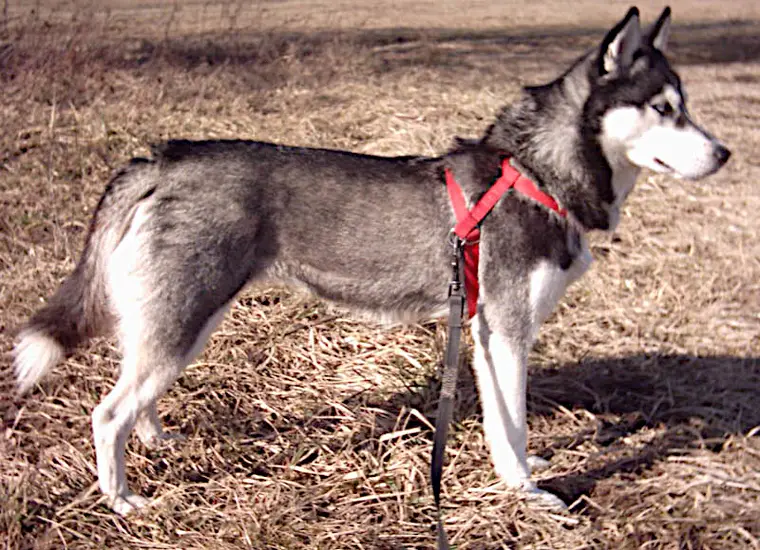
Per the AKC breed standard, males weigh 45–60 lb (20.4–27.2 kg) and females 35–50 lb (15.9–22.7 kg) — deliberately smaller than the similar-looking Alaskan Malamute. A healthy Husky is lean: ribs easily felt with light pressure, a visible waist and a marked tuck-up.
How much does a Husky eat per day?
A typical 25 kg pet Husky needs roughly 1,300–1,700 kcal per day (RER 820 × 1.6–2.0), but true needs swing widely with exercise — dogs in heavy sled conditioning need several thousand kcal, while an off-season or hot-weather pet may eat well below standard rations. Judge the portion by weekly body-condition checks, not by the bag or by appetite alone.
Why is my Husky not eating?
Seasonal appetite dips are well known in the breed — many Huskies eat much less in warm months or on light-exercise days, and a bright, lean dog skipping a meal is usually fine. If a Husky refuses food for more than about 48 hours, is losing weight, or shows vomiting, diarrhoea or lethargy, see your vet promptly.
When should a Husky puppy switch to adult food?
Around 12 months. Huskies reach up to about 27 kg as adults, so a large-breed puppy formula with controlled calcium (0.7–1.2% dry matter) is the safe default until growth is finished; transition over 7–10 days and recalculate portions from the new food's calorie density.
Do Huskies have joint problems I should feed for?
The breed is remarkably sound-hipped: OFA statistics rank the Siberian Husky 155th of 160 breeds for hip dysplasia risk, with only about 2% of evaluated dogs affected. The bigger joint risk is excess weight — keeping any dog lean is the cheapest insurance, and in the Purina lifespan study (Kealy et al., 2002) lean-fed dogs lived about 1.8 years longer.