Cockapoo feeding guide
The Cockapoo is a designer cross between a Cocker Spaniel and a Poodle - most often a Miniature Poodle - first bred deliberately in the United States in the 1960s, which makes it one of the oldest designer dogs. It is not recognized as a breed by the AKC or any major kennel club, so no official breed standard exists; breed clubs such as the American Cockapoo Club classify these dogs by height into toy, miniature, and maxi/standard varieties. Adult size depends almost entirely on which size of Poodle parent was used, so feeding amounts must be calculated from the individual dog's actual weight rather than a single breed average.
What all Cockapoos share
A 'Cockapoo portion' is three different numbers: a toy adult (2.5-5.5 kg) needs roughly 260-380 kcal a day, a miniature (5.5-9 kg) about 430-580, and a maxi (9-14 kg) about 580-810 as a neutered adult - always calculate from the dog's actual weight, because the Poodle parent's size, not the food bowl, sets the frame. Small size cuts both ways: toy and mini Cockapoos burn more calories per kilogram than large dogs yet have tiny stomachs, so they do best on a calorie-dense, small-kibble diet split into at least two measured meals a day, and 3-4 smaller ones for puppies under four months - a toy puppy that goes too long without food can slip into low blood sugar. The Cocker side brings a documented tendency to gain weight (Royal Canin lists Cocker Spaniels among the breeds most likely to), and neutering roughly doubles that risk, so measure meals rather than free-pour, keep treats under 10% of daily calories, and weigh monthly. Judge condition by feel, not by fluff: ribs easy to find under a thin fat layer, a visible waist from above, an abdominal tuck from the side - the curly coat hides both ribs and fat. Keep puppies lean (BCS 4-5/9); this cross is predisposed to hip dysplasia and patellar luxation, and every extra kilogram loads those joints.
- Yes
- No
- Normal
- Active — daily training / long runs
- Working dog — sled, hunting, herding
- On a weight-loss plan
Skip if you only need calories. 93 verified foods — or pick "My food isn't listed" to enter kcal from the bag.
Copy both from the bag's Calorie Content (ME) label — dry foods typically run 3,300–4,200 kcal/kg.
Estimates only — not veterinary advice
Feeding guides are a starting point — individual dogs vary with metabolism, activity, and body condition. Adjust by how your dog looks and feels, and talk to your vet before major changes.
Toy Cockapoo (teacup) — feeding chart & growth

Adult weight range: 2.5–5.5 kg · 6–12 lb
♂ Male
| Age | Healthy range (kg · lb) |
|---|---|
| 2 mo | 1–1.5 kg · 2–3 lb |
| 3 mo | 1.5–2 kg · 3–4 lb |
| 4 mo | 2–2.5 kg · 4–6 lb |
| 5 mo | 2.5–3 kg · 6–7 lb |
| 6 mo | 2.5–4 kg · 6–9 lb |
| 8 mo | 3–4.5 kg · 7–10 lb |
| 12 mo | 3–5.5 kg · 7–12 lb |
| 18 mo | 3–5.5 kg · 7–12 lb |
♀ Female
| Age | Healthy range (kg · lb) |
|---|---|
| 2 mo | 1–1.5 kg · 2–3 lb |
| 3 mo | 1.5–2 kg · 3–4 lb |
| 4 mo | 1.5–2.5 kg · 3–6 lb |
| 5 mo | 2–3 kg · 4–7 lb |
| 6 mo | 2–3.5 kg · 4–8 lb |
| 8 mo | 2.5–4 kg · 6–9 lb |
| 12 mo | 2.5–5 kg · 6–11 lb |
| 18 mo | 2.5–5 kg · 6–11 lb |
Miniature Cockapoo — feeding chart & growth

Adult weight range: 5.5–9 kg · 12–20 lb
♂ Male
| Age | Healthy range (kg · lb) |
|---|---|
| 2 mo | 1.5–2 kg · 3–4 lb |
| 3 mo | 2.5–3.5 kg · 6–8 lb |
| 4 mo | 3–5 kg · 7–11 lb |
| 5 mo | 4–6 kg · 9–13 lb |
| 6 mo | 4.5–7 kg · 10–15 lb |
| 8 mo | 5–7.5 kg · 11–17 lb |
| 12 mo | 5.5–9 kg · 12–20 lb |
| 18 mo | 5.5–9 kg · 12–20 lb |
♀ Female
| Age | Healthy range (kg · lb) |
|---|---|
| 2 mo | 1.5–2 kg · 3–4 lb |
| 3 mo | 2–3 kg · 4–7 lb |
| 4 mo | 3–4.5 kg · 7–10 lb |
| 5 mo | 3.5–5.5 kg · 8–12 lb |
| 6 mo | 4–6.5 kg · 9–14 lb |
| 8 mo | 4.5–7 kg · 10–15 lb |
| 12 mo | 5–8.5 kg · 11–19 lb |
| 18 mo | 5–8.5 kg · 11–19 lb |
Maxi/Standard Cockapoo — feeding chart & growth
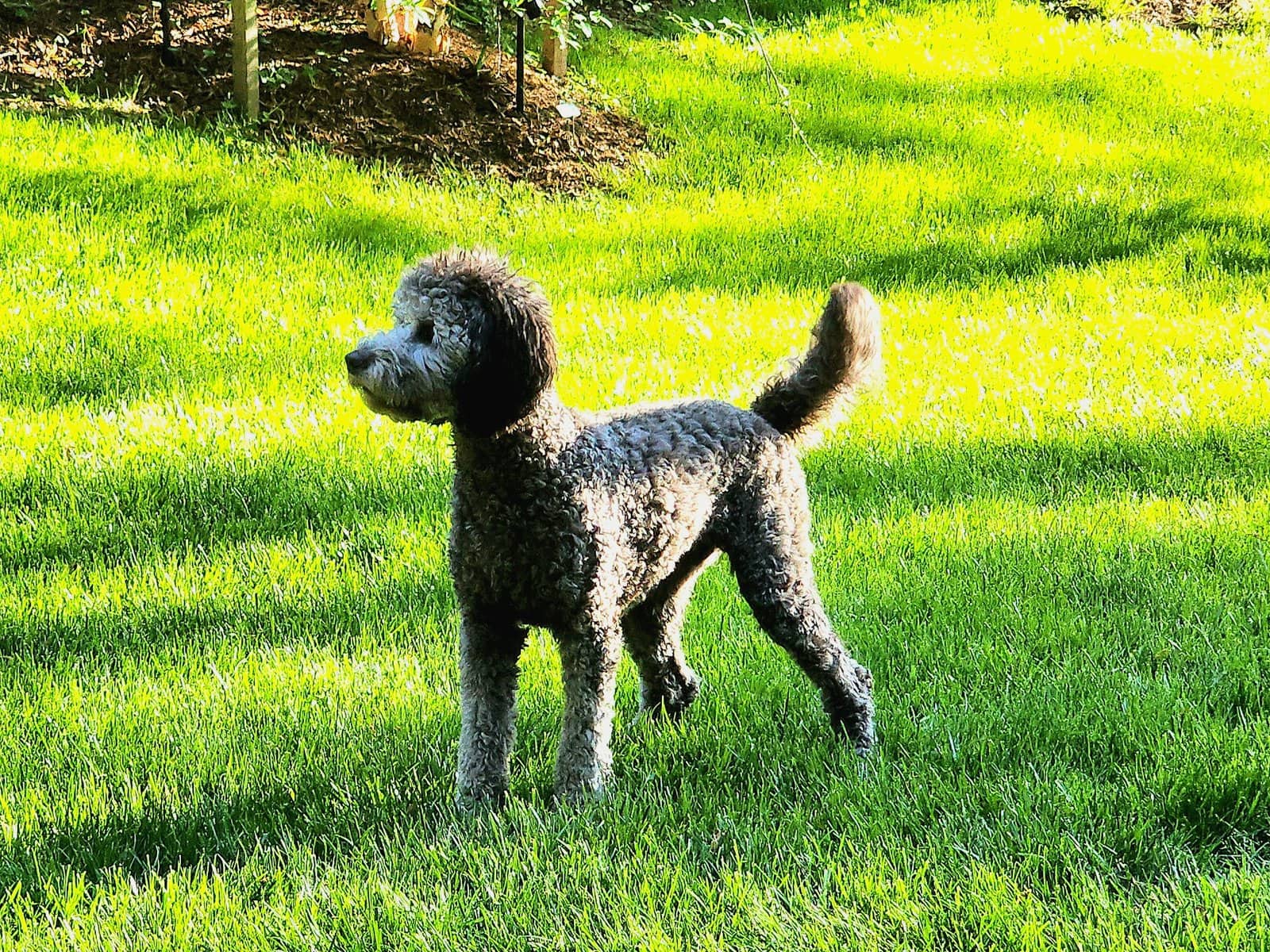
Adult weight range: 9–14 kg · 20–31 lb
♂ Male
| Age | Healthy range (kg · lb) |
|---|---|
| 2 mo | 2.5–3 kg · 6–7 lb |
| 3 mo | 3.5–5.5 kg · 8–12 lb |
| 4 mo | 5–7 kg · 11–15 lb |
| 5 mo | 6–8.5 kg · 13–19 lb |
| 6 mo | 7–10 kg · 15–22 lb |
| 8 mo | 8–11.5 kg · 18–25 lb |
| 12 mo | 9–13.5 kg · 20–30 lb |
| 18 mo | 9.5–14 kg · 21–31 lb |
♀ Female
| Age | Healthy range (kg · lb) |
|---|---|
| 2 mo | 2.5–3 kg · 6–7 lb |
| 3 mo | 3–5 kg · 7–11 lb |
| 4 mo | 4.5–6.5 kg · 10–14 lb |
| 5 mo | 5.5–8 kg · 12–18 lb |
| 6 mo | 6.5–9.5 kg · 14–21 lb |
| 8 mo | 7.5–10.5 kg · 17–23 lb |
| 12 mo | 8.5–12.5 kg · 19–28 lb |
| 18 mo | 9–13 kg · 20–29 lb |
Frequently asked questions
How much should I feed my Cockapoo?
It depends entirely on which size your dog is. As a neutered-adult starting point (RER = 70 x kg^0.75, times 1.6): a 4 kg toy needs about 320 kcal a day - roughly 3/4 cup of a typical 400 kcal/cup dry food; a 7 kg miniature about 480 kcal - 1 to 1 1/4 cups; an 11 kg maxi about 680 kcal - about 1 3/4 cups. At these small portion sizes a generous pour can be a 20% calorie error, so use a level cup or, better, a kitchen scale. Re-weigh your dog monthly and adjust in 10% steps based on the rib check, not the bowl.
How often should I feed a Cockapoo puppy?
Four measured meals a day at 8-12 weeks, at least three until about 4-6 months, then two to three from six months, and two meals a day for life. Frequency matters most at the toy end: very small puppies store little energy and can develop low blood sugar (hypoglycemia) if they go too long between meals, so toy Cockapoo puppies in particular should not skip meals. Keep every puppy on a complete diet with an AAFCO growth statement, and skip treats and supplements during growth - a well-formulated puppy food needs no extras, and added calcium can actually harm bone development.
Do a Toy Cockapoo and a Maxi Cockapoo eat differently?
Yes - same breed label, different feeding problems. A toy (adult 2.5-5.5 kg) eats tiny portions, so small measurement errors and a few dropped treats are a big percentage of the diet; a small-breed formula with small, calorie-dense kibble helps a small stomach meet high per-kilogram energy needs. A maxi (9-14 kg) eats medium-breed portions and stays on puppy food longer, because its skeleton keeps developing until roughly 12-16 months while a toy is often finished by 8-10. The constant is method: calculate from actual weight, feed measured meals, and hold body condition at 4-5 out of 9.
When is a Cockapoo fully grown, and when should I switch to adult food?
Height comes first and weight second: toys usually reach adult size by 8-10 months, miniatures by 9-11 months, and maxis keep filling out until 12-16 months. Switch from puppy to adult food when growth is essentially complete - around 10-12 months for toys and miniatures and 12-14 months for a maxi. Staying on calorie-dense puppy food past that point adds fat, not frame. If you are unsure, ask your vet to check body condition and growth-plate status before changing.
How much should a healthy Cockapoo weigh?
By variety: a toy ideally under 12 lb (2.5-5.5 kg), a miniature 12-20 lb (5.5-9 kg), and a maxi/standard 20-30 lb (9-14 kg), with occasional Standard Poodle crosses running larger. The American Cockapoo Club classifies by height instead - toy 10 inches or less at the shoulder, mini 11-14 inches, standard 15 inches and up - precisely because two dogs of the same height can differ in build and condition. The Cocker Spaniel parent (20-30 lb per AKC) is the consistent half of the equation; the Poodle parent's size - toy 4-6 lb, miniature 10-15 lb, standard 40-70 lb - decides the outcome. Whatever the scale says, the ribs should be easy to feel under a thin fat layer.
How do I switch my Cockapoo to a new food?
Gradually, over 7-10 days: start with about 25% new food mixed into the old, move to 50/50 after a couple of days, then 75/25, and only go to 100% once stools have stayed normal. The Cockapoo Club of GB recommends the same week-or-two transition to avoid stomach upsets. Sudden switches are the most common cause of the diarrhea owners then blame on the new food itself. If your dog refuses the food or has persistent loose stools at every ratio, stop and talk to your vet rather than cycling through brand after brand.
Why is my Cockapoo bigger or smaller than its littermate?
Because a Cockapoo is a crossbreed, not a fixed breed. Size tracks the Poodle line - a litter from a toy Poodle parent stays small, one from a miniature lands mid-range - but each puppy gets a different mix of genes, and the American Cockapoo Club notes size can be influenced by either parent's recent background. Later generations (F1b, F2, multigen) reshuffle size again, and males typically run 1-3 lb heavier than females. A practical checkpoint: a Cockapoo at six months is usually about 65-75% of its adult weight. Feed each dog for its own actual weight, not for what its littermates weigh.
Do small Cockapoos have special dietary needs?
Toy and miniature Cockapoos are small dogs with high energy needs per kilogram and very small stomachs, so a small-breed formula - small kibble, calorie-dense, highly digestible - lets them meet their calorie needs from small portions, per VCA nutrition guidance. Two cautions come with it: calorie-dense food makes overfeeding easy, so measure portions precisely; and small mouths crowd teeth, so daily brushing and annual dental checks matter, as toy and mini Cockapoos are prone to dental disease. No supplements are needed beyond a complete AAFCO diet, including for puppies. And if a breeder or ad pushes 'teacup' pups or breed-specific supplements, be skeptical - 'teacup' is a marketing term, not a recognized size class.