Labradoodle feeding guide
The Labradoodle is a designer cross between a Labrador Retriever and a Poodle, first bred in Australia in 1989 as a low-shedding guide dog; it is not an AKC-registered breed. Adult size tracks the Poodle parent — Miniature or Standard — so one breed name covers dogs from roughly 7 kg minis to 32 kg standards, and the multi-generation Australian Labradoodle is bred to tighter written size standards than early F1 crosses. Littermates can differ widely, especially in first generations. Feed by your dog's actual weight and body condition, not by the label.
What all Labradoodles share
Size is the first variable: an adult Labradoodle can be a 7 kg mini or a 32 kg standard, so portions must come from the dog's actual weight, never the breed label. The Labrador side of the pedigree matters most for appetite: roughly one in four Labradors carries a POMC gene deletion linked to greater food motivation and weight gain (Raffan et al., Cell Metabolism 2016), and that Labrador food drive comes through in most Labradoodle lines — expect a dog that begs convincingly and will overeat whenever meals are free-poured. Typical needs for a neutered adult run about 480-790 kcal per day for a mini (7-13.5 kg), 790-1,140 for a medium (13.5-22 kg), and 1,100-1,510 for a standard (21-32 kg); add 20-30% for dogs doing real work — hiking, running, service-dog duty — and cut back just as fast in rest weeks. Judge condition by feel, not the scale: ribs found easily under a thin fat layer, a visible waist from above, an abdominal tuck from the side, body condition score 4-5/9. Floppy-eared, fleece- or wool-coated doodles also benefit from omega-3s (EPA/DHA) in a complete diet for skin and coat. Keep growing standards and larger mediums lean on a large-breed puppy formula with controlled calcium — excess weight on a big, fast-growing frame loads developing joints for life.
- Yes
- No
- Normal
- Active — daily training / long runs
- Working dog — sled, hunting, herding
- On a weight-loss plan
Skip if you only need calories. 93 verified foods — or pick "My food isn't listed" to enter kcal from the bag.
Copy both from the bag's Calorie Content (ME) label — dry foods typically run 3,300–4,200 kcal/kg.
Estimates only — not veterinary advice
Feeding guides are a starting point — individual dogs vary with metabolism, activity, and body condition. Adjust by how your dog looks and feels, and talk to your vet before major changes.
Mini Labradoodle — feeding chart & growth

Adult weight range: 7–13.5 kg · 15–30 lb
♂ Male
| Age | Healthy range (kg · lb) |
|---|---|
| 2 mo | 2–3.5 kg · 4–8 lb |
| 3 mo | 3.5–5.5 kg · 8–12 lb |
| 4 mo | 4.5–7 kg · 10–15 lb |
| 5 mo | 5.5–8.5 kg · 12–19 lb |
| 6 mo | 6–9.5 kg · 13–21 lb |
| 8 mo | 6.5–11.5 kg · 14–25 lb |
| 12 mo | 7–13 kg · 15–29 lb |
| 18 mo | 7–13.5 kg · 15–30 lb |
♀ Female
| Age | Healthy range (kg · lb) |
|---|---|
| 2 mo | 1.5–3 kg · 3–7 lb |
| 3 mo | 3–4.5 kg · 7–10 lb |
| 4 mo | 4–6 kg · 9–13 lb |
| 5 mo | 5–7.5 kg · 11–17 lb |
| 6 mo | 5.5–8.5 kg · 12–19 lb |
| 8 mo | 6–10 kg · 13–22 lb |
| 12 mo | 6.5–11 kg · 14–24 lb |
| 18 mo | 6.5–11.5 kg · 14–25 lb |
Medium Labradoodle — feeding chart & growth
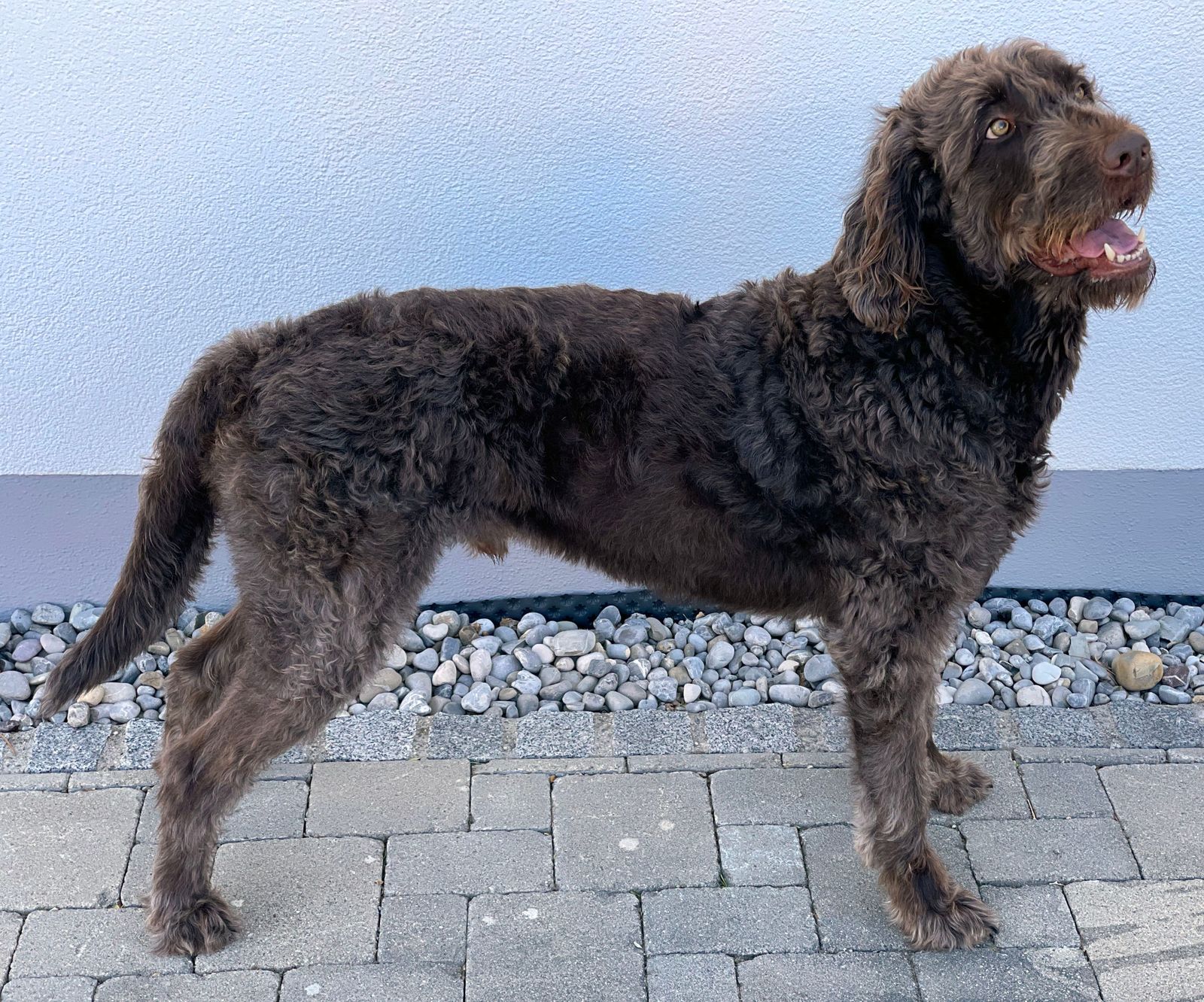
Adult weight range: 13.5–22 kg · 30–49 lb
♂ Male
| Age | Healthy range (kg · lb) |
|---|---|
| 2 mo | 3–5 kg · 7–11 lb |
| 3 mo | 5.5–8.5 kg · 12–19 lb |
| 4 mo | 7–10.5 kg · 15–23 lb |
| 5 mo | 9–13 kg · 20–29 lb |
| 6 mo | 10–15 kg · 22–33 lb |
| 8 mo | 12–18.5 kg · 26–41 lb |
| 12 mo | 13.5–21.5 kg · 30–47 lb |
| 18 mo | 13.5–22 kg · 30–49 lb |
♀ Female
| Age | Healthy range (kg · lb) |
|---|---|
| 2 mo | 2.5–4.5 kg · 6–10 lb |
| 3 mo | 5–7.5 kg · 11–17 lb |
| 4 mo | 6.5–9.5 kg · 14–21 lb |
| 5 mo | 8–11.5 kg · 18–25 lb |
| 6 mo | 9.5–13.5 kg · 21–30 lb |
| 8 mo | 11–16 kg · 24–35 lb |
| 12 mo | 13–18.5 kg · 29–41 lb |
| 18 mo | 13–19.5 kg · 29–43 lb |
Standard Labradoodle — feeding chart & growth
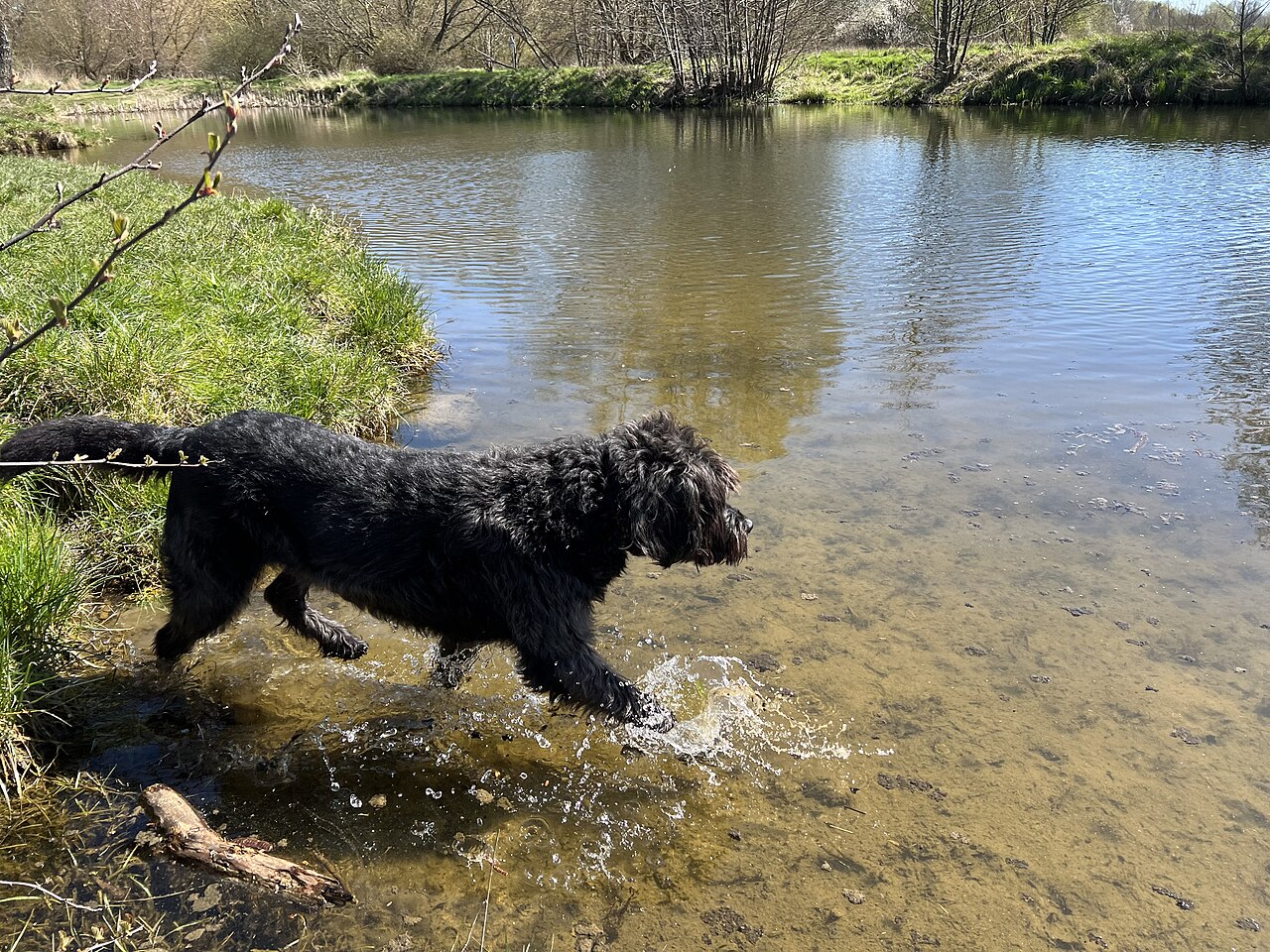
Adult weight range: 21–32 kg · 46–71 lb
♂ Male
| Age | Healthy range (kg · lb) |
|---|---|
| 2 mo | 4.5–6.5 kg · 10–14 lb |
| 3 mo | 9.5–12.5 kg · 21–28 lb |
| 4 mo | 13–17 kg · 29–37 lb |
| 5 mo | 16–21.5 kg · 35–47 lb |
| 6 mo | 17.5–23 kg · 39–51 lb |
| 8 mo | 21–28 kg · 46–62 lb |
| 12 mo | 21–30.5 kg · 46–67 lb |
| 18 mo | 21–32 kg · 46–71 lb |
♀ Female
| Age | Healthy range (kg · lb) |
|---|---|
| 2 mo | 4–6 kg · 9–13 lb |
| 3 mo | 8.5–11.5 kg · 19–25 lb |
| 4 mo | 11.5–15.5 kg · 25–34 lb |
| 5 mo | 14.5–19.5 kg · 32–43 lb |
| 6 mo | 16–21.5 kg · 35–47 lb |
| 8 mo | 19–25 kg · 42–55 lb |
| 12 mo | 19.5–26 kg · 43–57 lb |
| 18 mo | 20–27.5 kg · 44–61 lb |
Frequently asked questions
How much should I feed my Labradoodle?
By actual weight and size class, not the breed name. Benchmarks for a neutered adult (RER x 1.6): a 10 kg mini needs about 630 kcal per day — roughly 1.5 cups of a typical 400 kcal/cup dry food; a 17 kg medium about 940 kcal — around 2.5 cups; a 26 kg standard about 1,290 kcal — around 3.25 cups. Active dogs may need 20-30% more. Weigh monthly and adjust portions in 10% steps based on the rib check, not the begging.
How much and how often should I feed a Labradoodle puppy?
Four measured meals a day at 8-12 weeks, three meals through about 6 months, then two meals a day for life. Puppies need roughly twice the calories per kilogram of an adult, and portions should be set by the puppy's projected adult size — a mini headed for 10 kg eats very differently from a standard headed for 30 kg. Never free-feed a Labradoodle puppy: they inherit Labrador appetite and will overeat given the chance. Keep the puppy lean (body condition score 4-5/9) throughout growth.
What is the difference between feeding a mini and a standard Labradoodle?
Volume and calcium. A standard eats roughly twice what a mini does at each meal, and because standards mature at 21-32 kg, standard puppies should grow on a large-breed puppy formula with controlled calcium and calorie density until 12-18 months to protect their joints. Minis and smaller mediums heading under about 20 kg adult can use an ordinary puppy formula. Both sizes share the Labrador food drive, so measured meals and a monthly weigh-in matter at every size.
When is a Labradoodle full grown, and when should I switch to adult food?
The bigger the dog, the longer it takes. Minis usually finish growing by 11-13 months, mediums by 12-14 months, and standards reach full height around 12-14 months but keep filling out in chest and weight until 18-24 months. Switch to adult food when growth is largely complete: around 12 months for minis and mediums, and 12-18 months for standards. If your dog is still noticeably filling out, ask your vet before switching rather than guessing.
What is a healthy weight for a Labradoodle?
By size class: a mini runs about 15-30 lb (7-13.5 kg), a medium 30-48 lb (13.5-22 kg), and a standard 46-70 lb (21-32 kg). The condition matters more than the number: you should feel the ribs easily under a thin fat layer, see a waist behind the ribs from above, and see an abdominal tuck from the side (body condition score 4-5/9). Doodles vary hugely — a lean dog at the bottom of its band is healthier than an overweight one at the top.
How do I switch my Labradoodle to a new food?
Transition over 7-10 days: 25% new food with 75% old for about 3 days, then 50/50, then 75/25, then 100% new. If stools soften, slow down and stretch it to two or three weeks. A doodle's coat can look dull mid-transition, so give the new food a full month before judging skin and coat results. Do not switch foods because your dog begs for variety — Labradoodles beg for everything, and food changes reward the begging rather than solving it.
Why is my Labradoodle so much bigger or smaller than its littermates?
Size in this cross is set mainly by the Poodle parent — Miniature versus Standard — and first-generation (F1) Labradoodles are the most variable, so same-litter adults can differ by 15 lb or more. Ask the breeder for both parents' adult weights before you commit, and expect Australian multi-generation lines to hit their predicted size more reliably. Once you know the dog you actually have, feed from its current weight and body condition, not the litter average.
My Labradoodle acts starving all the time — what should I do?
That is usually genetics, not hunger. Roughly one in four Labradors carries a POMC gene variant linked to increased appetite and food motivation, and that drive passes into Labradoodle lines. If portions already match your dog's weight and the rib check shows ideal condition (4-5/9), treat the begging as behavior: measured meals at fixed times, a slow-feeder or puzzle bowl, low-calorie vegetables as toppers, and treats kept under 10% of daily calories. See your vet if the hunger is new, sudden, or paired with weight loss.