Boston Terrier Feeding Calculator
Get your Boston Terrier's portions right — calculated for their weight, life stage, and the exact food in your bag. Because the chart on the bag doesn't know your dog.
Values auto-fill from the food you pick. Can't find yours? Choose “My food isn't listed” in the search and copy the numbers from the bag's Calorie Content (ME) label — dry foods typically run 3,300–4,200 kcal/kg.
Boston Terrier feeding notes
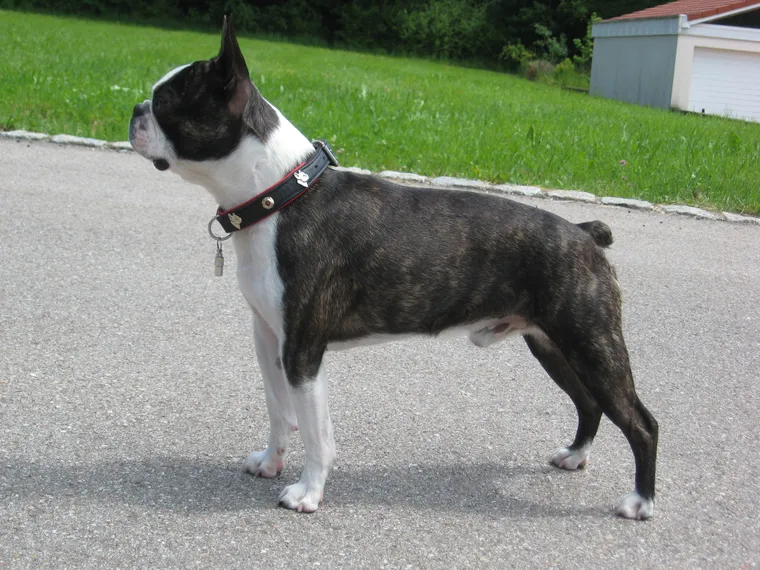
Bostons (5.4–11.3 kg) are compact, brachycephalic and easy to overfeed — a typical 8 kg neutered adult needs only about 530 kcal a day, and every extra pound makes flat-faced breathing harder. Feed measured meals from a shallow bowl split into 2 servings, avoid vigorous exercise for about an hour around mealtimes and in hot weather (brachycephalic dogs have documented increased heatstroke risk), and target body condition score 4–5/9.
Boston Terrier puppy growth chart — male & female
Healthy weight ranges by age. A puppy slightly lean is healthier than slightly heavy — especially for growing dogs.
♂ Male
| Age | Range (kg) |
|---|---|
| 2 mo | 2.7 – 3.4 |
| 3 mo | 4.4 – 5.7 |
| 4 mo | 6.1 – 7.6 |
| 5 mo | 7.1 – 8.8 |
| 6 mo | 8.1 – 9.9 |
| 8 mo | 9 – 10.7 |
| 12 mo | 9.6 – 11.3 |
| 18 mo | 5.4 – 11.3 |
♀ Female
| Age | Range (kg) |
|---|---|
| 2 mo | 2.4 – 3.1 |
| 3 mo | 4.1 – 5.2 |
| 4 mo | 5.6 – 7 |
| 5 mo | 6.6 – 8.1 |
| 6 mo | 7.5 – 9.2 |
| 8 mo | 8.3 – 9.9 |
| 12 mo | 8.8 – 10.4 |
| 18 mo | 5 – 10.4 |
Reference: Weight: AKC breed standard 12-25 lb (5.4-11.3 kg; standard divides breed into under-15 / 15-20 / 20-25 lb classes), single range — female range derived as ×0.92 (estimate); growth midpoints per small-breed developmental ratios (estimate); heatstroke: Ewers Clark 2022 Veterinary Evidence; anesthesia: Gruenheid et al. 2018 JAVMA. Always confirm against your vet's assessment — individual lines vary.
Feeding guide by growth stage
Meal frequency and food type for a growing Boston Terrier:
| Age | Meals | Food type | Watch for |
|---|---|---|---|
| 8–12 weeks | 3–4 × daily | puppy formula | Soak kibble warm water 10 min if still soft; weigh weekly. |
| 3–6 months | 3 × daily | puppy formula | Peak growth — feed to the chart, never free-feed; keep puppy lean. |
| 6–12 months | 2 × daily | puppy formula | Growth slows; reduce portions if ribs get hard to feel. |
| → adult (10–12 months) | 2 × daily | adult formula | Transition over 7–10 days, mixing increasing adult food. |
Boston Terrier milestones
What happens when — eyes, teeth, maturity, and when hard exercise is safe:
Frequently asked questions
How much should a Boston Terrier eat per day?
An adult Boston (12–25 lb / 5.4–11.3 kg) needs roughly 375–690 kcal per day: an 8 kg (18 lb) neutered adult needs about 530 kcal (RER 333 × 1.6), or about 1.3 cups of a typical 400 kcal/cup food. AKC divides the breed into three weight classes — under 15 lb, 15–20 lb and 20–25 lb — so ask your vet which class suits your dog's frame.
Why do Boston Terriers gain weight so easily?
Their short muzzle makes panting less efficient, so many Bostons burn fewer calories than their appetite suggests, and flat-faced breeds also gulp air when they eat fast. Measure every meal, keep treats under 10% of daily calories, and aim for body condition score 4–5/9 — in the Purina LifeSpan Study (Kealy et al., 2002), lean-fed dogs lived a median 1.8 years longer.
When should I switch my Boston Terrier puppy to adult food?
At 10–12 months. Bostons are a small breed that finishes growing around their first birthday, so a standard AAFCO growth formula is right — no large-breed formula needed. Split the day's food into 2–3 meals and transition to adult food over 7–10 days.
Should I feed my Boston Terrier differently in hot weather?
The bigger adjustment is exercise, not food: brachycephalic dogs have a documented increased heatstroke risk (Ewers Clark, Veterinary Evidence, 2022), so shift walks to early morning or evening and skip vigorous play within about an hour of meals. If your Boston gags or snorts while eating, a shallow brachy-friendly bowl and smaller, more frequent meals help.
Are Boston Terriers safe under anesthesia for dental cleanings?
Flat-faced breeds do carry a higher anesthesia complication risk (Gruenheid et al., 2018, JAVMA), which matters for professional dental cleanings — but skipping dental care is worse. Daily brushing and VOHC-accepted chews at home keep cleanings shorter and further apart; the AVMA notes most dogs show periodontal disease by age three.