Alaskan Malamute Feeding Chart & Calculator
Get your Alaskan Malamute's portions right — calculated for their weight, life stage, and the exact food in your bag. Because the chart on the bag doesn't know your dog.
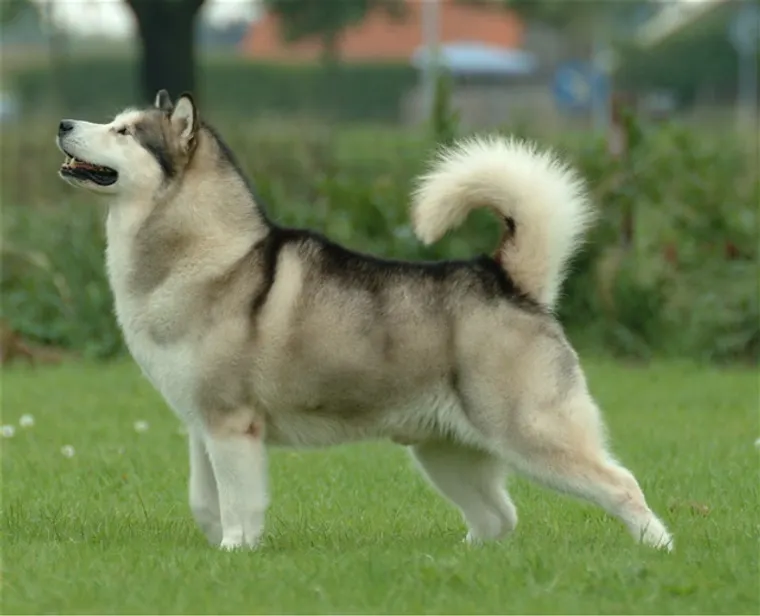
- Yes
- No
- Normal
- Active — daily training / long runs
- Working dog — sled, hunting, herding
- On a weight-loss plan
Skip if you only need calories. 93 verified foods — or pick "My food isn't listed" to enter kcal from the bag.
Copy both from the bag's Calorie Content (ME) label — dry foods typically run 3,300–4,200 kcal/kg.
Estimates only — not veterinary advice
Feeding guides are a starting point — individual dogs vary with metabolism, activity, and body condition. Adjust by how your dog looks and feels, and talk to your vet before major changes.
How much should I feed my Alaskan Malamute?
A Malamute puppy spends up to 18–24 months growing into a 30.5–42.5 kg freight-hauling frame, and the whole job is to slow that growth down: a large-breed puppy formula with calcium controlled to 0.7–1.2% of dry matter (AAFCO large-breed guidance), no calcium supplements, and kept lean — hip dysplasia is the breed's most commonly reported musculoskeletal problem (UK Kennel Club 2004 health survey), and rapid growth is a recognized risk factor. Adults are surprisingly efficient for their size: a 38.5 kg male needs only about 1,500–1,730 kcal a day (RER = 70 × 38.5^0.75 = 1,082, × 1.4–1.6), rising toward RER × 2 only in real working seasons. Two breed quirks touch the bowl: hypothyroidism is common in Malamutes and shows up as unexplained weight gain and coat changes, and the breed absorbs zinc poorly (zinc-responsive dermatosis) — both are vet diagnoses, not DIY supplement projects.
Same calories, different brands: grams per day
Daily kcal is fixed by weight and life stage — but grams per day swing by a food's calorie density. For a 36.5 kg neutered adult Alaskan Malamute (~1,663.174 kcal/day):
| Food | kcal/cup | Grams/day | Cups/day |
|---|---|---|---|
| Purina Pro Plan — Large Breed Chicken & Rice | 407 | 435 g | 4.1 |
| Blue Buffalo — Life Protection Large Breed Chicken & Brown Rice | 355 | 470 g | 4.7 |
| Hill's Science Diet — Adult Large Breed Chicken & Barley | 365 | 453 g | 4.6 |
| Purina ONE — Large Breed Adult Formula | 359 | 427 g | 4.6 |
Assumes the breed's midpoint weight and a neutered adult — your dog's exact number comes from the calculator above. Calorie figures from official label data, per-food sources on each brand page.
Alaskan Malamute puppy growth chart — male & female
Healthy weight ranges by age. A puppy slightly lean is healthier than slightly heavy — especially for large breeds.
View the month-by-month table — or see the full Alaskan Malamute weight chart with graphics →
♂ Male
| Age | Range (kg · lb) |
|---|---|
| 2 mo | 5.5–7 kg · 12–15 lb |
| 3 mo | 10.5–13 kg · 23–29 lb |
| 4 mo | 14.5–18 kg · 32–40 lb |
| 5 mo | 19–23.5 kg · 42–52 lb |
| 6 mo | 23–28.5 kg · 51–63 lb |
| 8 mo | 28–35 kg · 62–77 lb |
| 12 mo | 32–40 kg · 71–88 lb |
| 18 mo | 34.5–42.5 kg · 76–94 lb |
♀ Female
| Age | Range (kg · lb) |
|---|---|
| 2 mo | 5–6.5 kg · 11–14 lb |
| 3 mo | 9–11.5 kg · 20–25 lb |
| 4 mo | 12.5–16 kg · 28–35 lb |
| 5 mo | 17–21 kg · 37–46 lb |
| 6 mo | 20.5–25.5 kg · 45–56 lb |
| 8 mo | 24.5–31 kg · 54–68 lb |
| 12 mo | 28–35 kg · 62–77 lb |
| 18 mo | 30.5–37.5 kg · 67–83 lb |
Reference: Weight: AKC/FCI standard desired sizes via Wikipedia (male 85 lb / 38.5 kg, female 75 lb / 34 kg — point values with stated natural range; sex ranges derived ±10%, estimate); growth midpoints per giant-leaning large-breed developmental ratios, ~93% at 12 mo (estimate); hip dysplasia most common reported musculoskeletal problem: UK Kennel Club 2004 breed health survey; zinc-responsive dermatosis: Vitale, dvm360; hypothyroidism common in breed: Blackwell's Five-Minute Veterinary Consult; lifespan 11.3 yrs: McMillan et al. 2024; calcium guideline: AAFCO large-breed (0.7-1.2% DM); longevity: Kealy et al. 2002. Always confirm against your vet's assessment — individual lines vary.
How much should a Alaskan Malamute puppy eat?
Meal frequency and food type for a growing Alaskan Malamute:
| Age | Meals | Food type | Watch for |
|---|---|---|---|
| 8–12 weeks | 3–4 × daily | large-breed puppy formula (controlled calcium 0.7–1.2%) | Soak kibble warm water 10 min if still soft; weigh weekly. |
| 3–6 months | 3 × daily | large-breed puppy formula (controlled calcium 0.7–1.2%) | Peak growth — feed to the chart, never free-feed; keep puppy lean. |
| 6–12 months | 2 × daily | large-breed puppy formula (controlled calcium 0.7–1.2%) | Growth slows; reduce portions if ribs get hard to feel. |
| → adult (12–14 months) | 2 × daily | adult formula | Transition over 7–10 days, mixing increasing adult food. |
| 14–18 months | 2 × daily | adult formula | Growth plates close — higher-impact exercise now OK. |
Alaskan Malamute milestones
What happens when — eyes, teeth, maturity, and when hard exercise is safe:
How much should I feed my pregnant or nursing Alaskan Malamute?
Pregnancy and lactation are the highest-energy periods your Alaskan Malamute will ever go through — at peak milk production a mother burns 3–4× her normal resting energy. For a typical 33.5 kg Alaskan Malamute mother (RER = 975 kcal):
| Stage | Energy need | ≈ kcal/day | Food |
|---|---|---|---|
| Pregnancy, weeks 1–6 | Normal adult amount | — | Her usual adult formula |
| Pregnancy, weeks 6–9 | ~1.5–2× RER, climbing | ~1,755 | Switch to a growth/puppy formula |
| Nursing, weeks 3–4 (peak) | 3–4× RER | 2,925–3,900 | Puppy formula, often free-choice |
| Weaning (milk dries up) | Back toward normal | — | Gradual return to adult formula |
The puppy-formula switch in late pregnancy is standard veterinary practice (energy-dense and calcium-balanced for fetal and milk production). Litter size and body condition shift the numbers — confirm the plan with your vet, and re-run the calculator at her current weight each week.
Frequently asked questions
How much should an Alaskan Malamute eat per day?
A 38.5 kg neutered male needs about 1,500–1,730 kcal per day (RER = 70 × 38.5^0.75 = 1,082, × 1.4–1.6) — roughly 4 cups of a 400 kcal/cup food; a 34 kg female needs about 1,380–1,580 kcal (RER 986 × 1.4–1.6). Malamutes were built to haul freight on modest rations, so they gain weight easily as house pets — measure meals and re-weigh monthly rather than trusting the bag chart.
How much should an Alaskan Malamute puppy eat?
A 6-month-old male (about 23–28.5 kg) needs roughly 1,600 kcal per day (≈2 × RER) split across two to three meals — always on a large-breed puppy formula with calcium controlled to 0.7–1.2% of dry matter per AAFCO large-breed guidelines. Per the chart, he'll be only about 93% of adult weight at 12 months and still filling out at 18, so keep the curve slow and lean: rapid growth and excess calcium are recognized risk factors for developmental joint disease in large breeds.
When should I switch my Malamute puppy to adult food?
Not before 18 months — this is a slow-maturing breed heading for 30.5–42.5 kg. Stay on a large-breed puppy formula the entire growth phase, never add calcium supplements on top of a complete food, and transition to adult food over 7–10 days once height has clearly plateaued. Hip dysplasia is the breed's most commonly reported musculoskeletal condition (UK Kennel Club 2004 survey), and lean body condition is the main lever owners control — in the Purina LifeSpan Study (Kealy et al., 2002), lean-fed dogs lived a median 1.8 years longer.
Does my Malamute need more food in winter or when working?
Only with real workload — being outside in cold weather is not work for a breed with a double coat built for it. A Malamute in serious sledding, packing or daily long-distance work may need RER × 2 or more — over 2,100 kcal for a 38.5 kg dog — while the same dog on winter walks stays near its usual 1,500–1,730 kcal. Judge by ribs and weekly body weight: working rations on a retired dog are how obesity starts, and obese weight is very hard to get off a frame with dysplasia-prone hips.
My Malamute is gaining weight and has a poor coat — is it the food?
Get bloodwork before blaming the bag. Hypothyroidism is the most common hormonal disorder in dogs and is common in Malamutes — its classic signs are exactly weight gain without eating more, plus a dull, thinning coat — and it's diagnosed with a thyroid panel, not a food change. The breed also absorbs zinc poorly and is the classic breed for zinc-responsive dermatosis (crusty, scaly skin around the face and pads); that's a veterinary diagnosis too, and zinc should be supplemented only under vet direction.